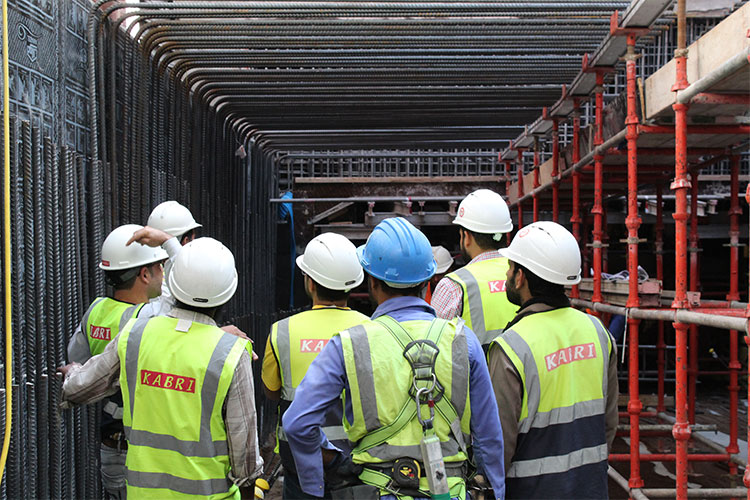
Today we are happy to announce six years since we successfully delivered “Burj Vista”, the project that challenged us to use the biggest crane in Middle East. Pedestrian link bridge located in Downtown Dubai, connecting the link bridge that’s between metro station Burj Khalifa to Dubai mall and Burj Vista building. We have achieved great progress in its construction as the foundations, columns and steel work have been completed with several professionals and skilled workers involved on the project on a daily basis. Because the bridge is located in the “heart” of Dubai it was a challenge for us as contractors to not disturb the traffic and the normal movement of the people reaching Burj Khalifa, but at the same time to deliver the project at the shortest possible time with the best possible quality. Today the glass tunnel travelator enables grand views of Burj Khalifa and is fully temperature controlled, making it a pleasure to walk across.
Key Elements Behind Successful Pedestrian Bridge Delivery
Successfully delivering a pedestrian bridge construction project requires careful planning, meticulous execution, and a focus on meeting the needs of both pedestrians and the surrounding community. One of the key elements involved in the successful delivery of a pedestrian bridge construction project includes multiple segments. Design and functionality, a successful pedestrian bridge project starts with a well-thought-out design that considers both aesthetics and functionality. The bridge must blend seamlessly into the surrounding environment while providing a safe and convenient passage for pedestrians. Factors such as foot traffic patterns, accessibility for people with disabilities, and integration with existing infrastructure are considered during the design phase. Engaging with stakeholders, including local communities, government entities, architects, engineers, and construction teams, is crucial. The project team seeks input and feedback from stakeholders to ensure that the bridge design meets the specific needs and preferences of the community. Regular communication channels are established to keep stakeholders informed about the project’s progress, address concerns, and manage expectations. Regulatory compliance and permitting meeting all regulatory requirements and obtaining the necessary permits is essential for a successful project. The project team works closely with relevant authorities to navigate the permitting process, ensuring that all safety, environmental, and construction standards are met. This includes compliance with building codes, environmental impact assessments, and any specific regulations related to pedestrian infrastructure.
Effective project management is crucial to ensure that the pedestrian bridge construction project stays on schedule and within budget. A dedicated project manager oversees all aspects of the project, including procurement, resource allocation, scheduling, and risk management. Regular progress updates, milestone tracking, and coordination among different teams and contractors ensure smooth project execution. Construction Techniques and Safety Measures: The construction phase involves implementing efficient construction techniques and methodologies. Prefabrication of bridge components off-site, when possible, can reduce construction time and minimize disruption to the surrounding area. Safety measures, including the provision of adequate worker training, proper equipment, and adherence to strict safety protocols, are crucial to protect the construction workers and ensure a safe construction environment.
Quality Control and Testing: Throughout the construction process, rigorous quality control measures are implemented to ensure the bridge’s structural integrity and compliance with design specifications. Regular inspections, material testing, and adherence to industry standards are critical. Non-destructive testing methods, such as load testing and structural analysis, may be employed to verify the bridge’s strength and stability.
Integration with Surrounding Environment: Successful pedestrian bridge projects take into consideration the integration of the bridge with the surrounding environment. This may involve landscaping, lighting design, and aesthetic elements that enhance the bridge’s visual appeal and promote a positive user experience. Environmental considerations, such as stormwater management and ecological impact mitigation, are also addressed.
Completion and Handover: Once construction is complete, final inspections and safety checks are conducted to ensure that the pedestrian bridge meets all requirements. As-built documentation, including drawings, warranties, and maintenance guidelines, is provided to the project owner. Proper handover procedures are followed to ensure a seamless transition to the bridge’s operational phase.
Delivering a pedestrian bridge construction project successfully requires meticulous attention to detail, collaboration, and a commitment to safety, functionality, and community engagement. By adhering to these key elements, a pedestrian bridge can be delivered on time, within budget, and with the highest quality standards, ultimately providing a safe and efficient crossing for pedestrians and leaving a positive impact on the community.